









































Course Outline

4.5 Days

9 Core Modules

Chapter 1 - Introduction

  • Data flow and process flowchart
  • Review of key concepts from CAT I

Chapter 2 - Vibration Theory

  • Basic motion (superposition)
  • Artificial high peaks
  • Transient vibration response
  • Beat
  • Time domain digitization
  • Frequency domain calculation
  • Relationship between waveform sampling rate and Fmax
  • Resolution
  • Time domain resolution
  • Frequency domain resolution
  • Units of amplitude
  • Characteristics of vibration
  • Amplitude conversion
  • Filtering
  • Filter applications
  • Aliasing
  • Phase
  • Phase relationship and units of measure
  • How do we measure phase?
  • Representing results from phase analysis
  • Windows

Chapter 3 - DSA Fundamentals

  • Analyzer types
  • Portable Digital Signal Analyzer (DSA)
  • Online vibration analysis
  • Vibration transducers
  • Displacement transducers
  • Velocity transducers
  • Accelerometer
  • Calibration
  • Triboelectric effect
  • Mounting
  • Data capturing recommendations
  • Frequency domain setup method
  • Frequency domain setup effects
  • Time domain setup effects
  • Setup decision tree

Chapter 4 - Site Survey

  • Planning a survey
  • Baseline
  • Routes
  • Acceptance testing

Chapter 5 - Shaft Centreline Introduction

  • Orbit
  • Centreline

Chapter 6 - Natural Frequency Intermediate

  • What are natural frequency, resonance, and critical speed?
  • Single degree of freedom (SDOF)
  • Multi degree of freedom (MDOF)
  • Resonance
  • Critical speed
  • Determining natural frequency
  • Mathematical methods
  • Bump test
  • Transient analysis
  • External excitation
  • Solving resonance
    • Remove the excitation
    • Change the natural frequency
    • Application of damping
    • Dynamic absorbers
    • Isolation

Chapter 7 - Precision Maintenance

  • Alignment
  • Alignment equipment
  • Alignment procedure
  • Balancing
  • Rigid and flexible rotors
  • Methods
  • Standards and tolerances
  • Single plane balancing procedure
  • No phase balancing procedure
  • Reasons that a balancing attempt is unsuccessful

Chapter 8 - Reporting

  • Standards
  • Report components
  • Routine analysis reporting
  • Online reporting
  • Acceptance test reporting
  • Special investigations
  • Follow-up
  • Efficient analysis
  • Alarms

Chapter 9 - Equipment Knowledge

  • Motors (induction)
  • Pumps and fans (basic)
  • Gearboxes
  • Compressors
  • Structures and piping
  • Rolling and paper mills
  • High-speed rotors

Course Materials

Learning Outcome

Certification (Optional)

Snapshot

Introduction

Vibration Theory

DSA Fundamentals

Site Survey

Shaft Centreline Introduction

Natural Frequency Intermediate

Precision Maintenance

Reporting

Equipment Knowledge

Need more info?

Get in touch with our team

Your Instructors

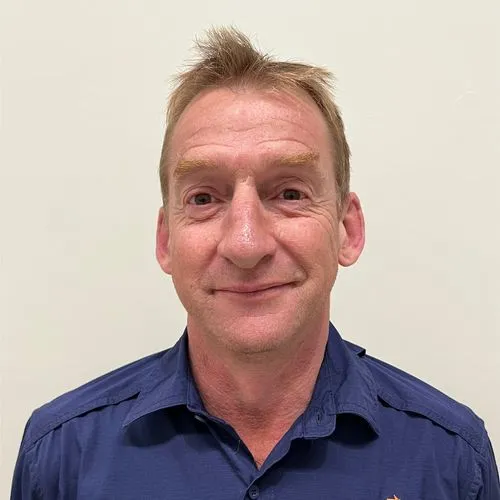
Chris Hill

Chris Hill

CAT IV in Vibration Analysis/ Senior Analyst/ Trainer

Condition Monitoring Group

Chris is a highly experienced Senior Analyst with more than 25 years in condition monitoring. Certified to ISO CAT IV in vibration analysis since 2014, he brings extensive real-world expertise across walkaround and online systems.

View Profile

Get a brochure

Please provide your details to download a PDF brochure of our courses

Thank you!

Download
Oops! Something went wrong while submitting the form.

Enquiries &

Booking

Vibration Analysis Level 2

Location
Date
Price
No public training currently listed for this course
No items found.

Private Courses

Whether you have 15 or 1500 people to train, our schools can be offered at a time and location most convenient for your company.

Your Learning

Pathway

Asset Schools training courses can be completed individually at any time, but have you considered planning a Learning Pathway? For example:

Still unsure about something?

Contact Us

Our Clients

The knowledge and practical steps imparted during Asset Schools have proven to be invaluable for the overall improvement across the business in greater availability and reduced unit lifecycle costs. Attendance at the Asset Schools portfolio of courses is now a foundation requirement for our team of planners due to the business and personal development benefits.

Ash Davis

OAM, Senior Mines Systems Planner

FMG

Asset Management School was absolutely fantastic! Not just the content, but also the networking evening, the whole experience. Despite 23 years as a maintenance engineer and planner, I learnt so much to take back to apply in my business.

Salman Rashed

Assets Maintenance Planner

Waikato Regional Council

Related

Courses

FMECA School

This course teaches participants how to develop and conduct their own FMECA studies, enhancing the reliability of their assets through practical exercises and core facilitation.

  • 2 Days, 9 Modules
  • Onsite
Find out more

CMRP Exam Prep Course

Validate your expertise in maintenance, reliability, and asset management by earning the industry’s leading professional certification.

  • 3 Days, 16 Modules
  • Onsite
Find out more

Lubrication School

Level 2

Lubrication School 2 is designed to elevate your understanding and skills in the field of machinery lubrication, aligning with both the ICML requirements for MLA II certification.

  • 2.5 Days, 9 Modules
  • Public, Onsite
Find out more

Further Reading

No items found.

Join our mailing list

Thank you! Your submission has been received!
Oops! Something went wrong while submitting the form.
×